Tinder alternatives are gaining ground as more people get tired of the same swipe-and-hope routine. Some want something more serious. Some want something more fun. Almost all of them want an app that respects their time.
2026 is also the year the "just swipe" model is starting to crack. Bumble is scrapping swiping entirely later this year in favor of an AI-driven matching experience. Tinder is testing a camera-roll based matchmaker called Chemistry. Hinge, which never swiped in the first place, is now the growth story in Match Group's portfolio. Dating app "burnout" is real, and the apps that are winning are the ones solving an actual matching problem instead of just shuffling photos faster.
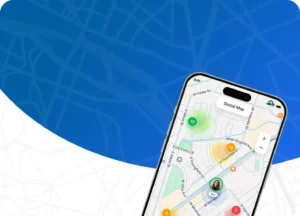
That matching problem is one we know from the inside. AppMakers USA has built real dating apps (AstroDate, Krush, Flercha, Meetby, Official, Single to Saddled among them), and on a separate two-sided marketplace product, ShiftPass, we had to solve the same underlying challenge every location-based dating app faces: how do you serve a "who's near me right now" list and a live map from the same data without one query fighting the other? We went with PostGIS geography columns on Postgres instead of MongoDB's $near, because the workload was dominated by relational joins, not flat proximity lookups. One query, using ST_DWithin for radius, handled both views.
That's the same architecture problem happn is solving below, just with a different business model wrapped around it.
Here's where the other eight apps beyond Tinder actually stand today, what's genuinely changed, and what's just marketing.

Bumble spent a decade built around one rule: in straight matches, women message first.
That rule is no longer absolute. Bumble rolled out "Opening Moves" back in 2024, letting women set a prompt that men can respond to instead of sending the first message themselves, and by 2026 the strict requirement has softened into an option rather than a mandate.
The bigger change is still coming. Bumble CEO Whitney Wolfe Herd confirmed in a May 2026 interview that Bumble is dropping swiping altogether, calling the replacement "revolutionary for the category." The rollout starts in select markets in Q4 2026, and it's built around Bee, an AI assistant Bumble has been testing that interviews new users and recommends matches directly instead of handing you a stack of profiles.
What hasn't changed: ID verification still adds a layer of trust, and Share My Date still lets a trusted contact track your meetup. The Date, BFF, and Bizz modes still cover romance, friendship, and networking in one app. Video calls and photo sharing are still standard features you'd expect from any modern dating app.
If you're picking Bumble today, pick it for the safety tooling and the multi-mode flexibility. Don't pick it expecting the swipe interface to look the same a year from now.

Hinge still refuses to let you swipe on a stranger's face and call it a decision. You like a specific photo or a specific prompt answer, which gives you something real to comment on instead of "hey."
Every profile needs six photos and three answered prompts before it goes live. Daily "Standouts" surface the profiles Hinge's algorithm rates as high-compatibility matches, and the only way to act on a Standout is to send a Rose, Hinge's upgraded version of a Like. Free users get one Rose a week. Hinge also runs a "Most Compatible" feature once a day, a single profile the algorithm is most confident you'd both be into, and dating-industry reviewers who track this closely put the date-conversion rate on Most Compatible matches at roughly eight times higher than a standard Discover match.
Verification runs through a video selfie check, and verified profiles get a badge for it. The free tier caps daily likes at eight, which is a real limitation if you're in a competitive market. Hinge+ and HingeX remove that cap and add priority visibility.
Hinge is currently the financial bright spot in Match Group's whole portfolio, and the "designed to be deleted" pitch is holding up because the prompt system filters out people who won't put in five minutes of effort on a profile.

Coffee Meets Bagel still isn't trying to be a swipe app. It's built around a daily batch: men get up to 21 curated "Bagels" at noon, women see only men who've already liked them. That asymmetry is deliberate, and it's the whole reason the app has a heavier female user base than most competitors.
Beans, the app's internal currency, unlock Priority Likes, profile boosts, and reopened chats after the standard match window closes. A Priority Like functions like a Tinder Super Like and is claimed to get noticed roughly six times faster.
The identity layer got a real upgrade in April 2026: CMB rolled out AI-based Selfie Verification for markets outside Singapore, checking a short video selfie against your uploaded photos before granting a verified badge. Per Coffee Meets Bagel's own numbers, the platform has driven over 250 million matches, and the company says the large majority of its users are looking for something serious, not casual.
If intentional dating in a city with real user density is the goal, Coffee Meets Bagel earns its spot on this list. If you're outside a major metro, expect the daily batch to run thin.

Hily's whole pitch is that compatibility beats a first-glance swipe, and its matching algorithm was co-developed with clinical psychologist Dr. Joseph Cilona around a 40-question quiz plus a set of "Icks & Clicks" prompts. As of January 2026, industry tracker Global Dating Insights ranked Hily as the third most-downloaded dating app in the US, ahead of Bumble in that specific measure.
Safety has been the bigger story here recently. In October 2025, Hily launched Consent Guard, which uses machine learning to detect and hold back sexually explicit text and images until both people opt in, replacing an older, cruder explicit filter. Every user also carries an internal "risk score" built from verification status, complaint history, and behavior, and a profile that trips the risk threshold gets quietly locked out of matching with anyone else.
Hily still supports in-app video calls and livestreaming for people who want to skip third-party apps before meeting. Premium pricing varies by term length and region, so check the in-app price before committing to anything.
Thinking about launching a niche dating app? AppMakers USA can help! From innovative matchmaking algorithms to AI-driven moderation, we build apps that succeed.

Raya still runs on an application, a referral, and a committee of anonymous global members who decide who gets in. The reported acceptance rate has held around 8% for years, and it's still one of the more consistently cited numbers in dating-app reporting.
What's changed is the scale of the line outside the door. Earlier estimates put Raya's waitlist in the low six figures. Reporting from WIRED in 2026 puts it closer to 2.5 million people, some of whom have been waiting years with no response at all. Raya doesn't publish a waitlist number or an acceptance dashboard itself, so treat any specific figure, including this one, as a reported estimate rather than a confirmed statistic.
Membership pricing has also drifted depending on source and market, generally landing somewhere between $19.99 and $24.99 a month, with a Raya+ tier around $49.99. Once you're in, the curated slideshow-style profile set to music is still the format, and screenshotting another member's profile is still grounds for a warning or removal.
Raya is a slow, expensive, uncertain path to a smaller pool. That's the entire point for the people who use it.

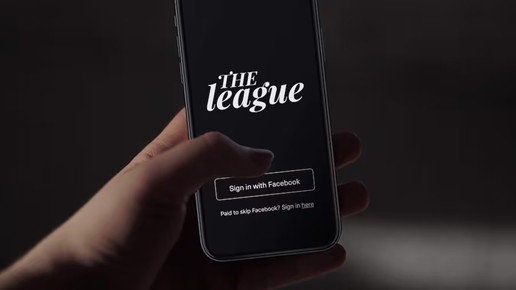
The League still pitches itself to career-focused daters who'd rather get three curated matches a day than a hundred low-effort ones, delivered in a "Batch" at a fixed daily time. What the current live version of this page didn't mention: Match Group, the same parent company behind Tinder, Hinge, OkCupid, and Plenty of Fish, acquired The League in 2022. It now sits inside the same portfolio as three other apps on this list.
The League still leans on LinkedIn and Facebook connections to screen applicants and reduce catfishing, and its group features (branded things like "Yacht Week" or "Golf Buddies") lean hard into the professional-networking angle alongside dating. New applicants go on a waitlist while the team verifies accounts, and paying members get expedited review, League Tickets to boost visibility, and access to League Groups and live events.
Don't just compete. Innovate. AppMakers USA specializes in developing dating apps that attract and retain users. Let's talk about your idea.
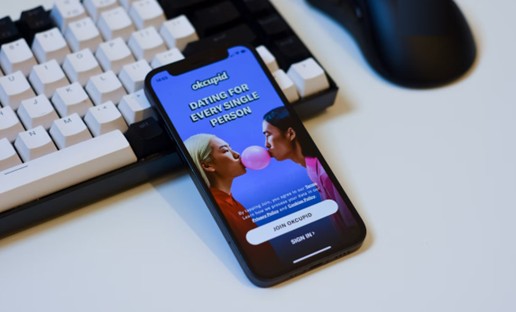
kCupid has been running its compatibility quiz since 2004, and the Match % score, built from questions on values, lifestyle, and relationship goals, is still the thing that separates it from a pure swipe app. The honest version of OkCupid's story includes a rough patch: after Match Group's 2011 acquisition, the platform gradually simplified, and the long-form profile essays that once defined it were removed in 2023. Some of that depth has come back since, and OkCupid remains the most identity-inclusive mainstream app on the market, supporting more than 20 gender identities and over a dozen sexual orientations.
As of March 2026, OkCupid requires "Face Check" video selfie verification to cut down on AI-generated profiles, a response to the same catfishing problem every app on this list is now fighting. Pro-Choice and social-cause badges let users signal values upfront, with OkCupid donating to Planned Parenthood for each Pro-Choice badge added.
Free users can browse, answer questions, and message mutual matches without paying anything, which is more functional than most competitors' free tiers. That's worth something in a category where "free" usually means "barely usable."
User experience makes or breaks a dating app. Ensure yours is designed for engagement and retention with AppMakers USA's expert mobile app development services.

Happn's entire premise is geolocation: it matches you with people you've actually crossed paths with, at a café, at work, on your usual walk. That's a harder engineering problem than it looks like from the UI. Every location ping has to get compared against everyone else's recent pings in real time, in a radius, without leaking anyone's exact location, which is the same class of problem we solved on ShiftPass by storing points as PostGIS geography and querying with ST_DWithin instead of flat lat/lng math.
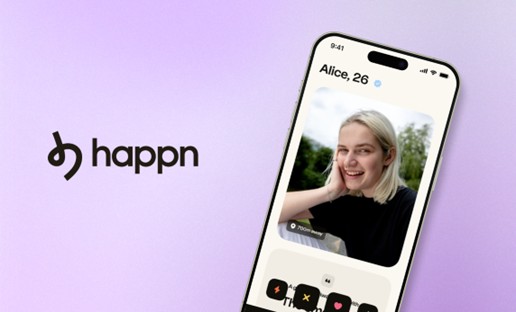
The bigger news for Happn isn't a feature. It's ownership. In September 2025, Hello Group, an Asia-based social and dating operator, acquired Happn. Under new leadership, Happn has also started fighting the same battle every app here is fighting: AI-generated profiles. The company added a reporting feature specifically for suspected AI-linked accounts in 2026, aimed at closing the gap between a curated profile photo and the person who actually shows up.
Certified video verification, daily curated matches, and approximate-location privacy controls are all still in place. If your dating life already happens in a specific handful of real-world spots, Happn is built around exactly that.
Want to build the next big dating app? Let AppMakers USA help you create a feature-rich, high-performing platform that stands out.
Learn more about our custom dating app development services.

Where Happn narrows the pool to people you've actually crossed paths with, Plenty of Fish (POF) goes wide. Founded in 2003 and part of the Match Group family alongside Tinder, Hinge, OkCupid, and The League, POF has logged over 50 million downloads across a user base spread through the US, Canada, the UK, Australia, and Spain.
One thing worth correcting from the previous version of this page: POF's "Live!" streaming feature, a holdover from the pandemic era when video-first dating spiked, was shut down by Match Group in August 2024 along with similar livestreaming features on its sister app BLK. If a review still lists live streaming as a current POF feature, that review is out of date.
What's still active is "Meet Me," POF's straightforward swipe-and-match flow, along with detailed preference settings for casual versus long-term intentions. POF remains one of the more accessible entry points into the Match Group ecosystem for people who want volume over curation.
Most now combine ID or video-selfie verification, AI-based identity checks, encrypted messaging, and active moderation. Video chat before meeting in person has become close to standard, not a bonus feature.
They tend to filter for people who are actually willing to spend money on finding a relationship, which cuts down on fake profiles and low-effort browsing. That doesn't guarantee better matches. It guarantees a smaller, more committed pool.
Yes, and 2026 is the year that became obvious. Bumble is dropping the swipe entirely for an AI-driven matching flow. Tinder is testing an AI matchmaker called Chemistry that reads your camera roll instead of asking you to judge strangers one photo at a time. Hinge never swiped to begin with, and it's the app growing fastest inside Match Group right now. Swiping isn't dead yet, but it's no longer the default assumption.
The interface, the messaging rules, and the profile format are all different enough to require a reset. The bigger adjustment is usually expectations: a curated-match app like The League or Coffee Meets Bagel will never feel as fast as an endless swipe feed, because slowing you down is the entire design.
Yes, and OkCupid is still the clearest example, with more gender identity and orientation options than any other app on this list. Most competitors have added at least basic non-binary and orientation filters, though depth still varies a lot app to app.
Online dating in 2026 isn't just Tinder with different logos slapped on. Bumble is walking away from the swipe. Hinge is the growth engine propping up its own parent company. Raya's waitlist has ballooned into the millions. Match Group now owns four of the nine apps on this list. The apps solving a real matching problem, geolocation, compatibility scoring, curated batches, are the ones still standing. The ones that were just "Tinder with a different color scheme" have quietly disappeared from this conversation.
If you're building a dating app of your own, the lesson from all nine of these is the same one we learned building our own: the swipe screen is not the hard part. The matching engine underneath it is.
We respond promptly, typically within 30 minutes. We'll hop on a call and hear out your idea, protected by our NDA. We'll provide a free quote and our thoughts on the best approach for you. Even if we don't work together, feel free to consider us a free technical resource to bounce your thoughts or questions off of.