AI agents in the legal industry are reshaping how firms operate. They deliver speed, precision, and cost savings which were once thought impossible. From advanced document review with 94% accuracy to intelligent research that understands context, these tools go far beyond keyword queries.
More than just automation, AI agents offer continuous access to critical legal data, streamline repetitive workflows, and support smarter, real-time decision-making which results in a drastic reduction of client bills by up to 90%. For firms under pressure to move faster while maintaining compliance, the implications are massive.
In this article, we’ll explore how AI is transforming legal operations—from billing and brief-writing to risk detection and regulatory strategy.

Legal research has always been a time-intensive aspect of legal practice, but AI agents are transforming how law firm operations approach the task where it brings greater speed, accuracy, and relevance to every query.
Platforms like CoCounsel, powered by GPT-4, support secure legal research with semantic analysis that goes far beyond basic keyword matching. Instead of simply surfacing documents containing specific phrases, these tools understand legal context, delivering more relevant case law, precedent, and regulatory materials.
Harvey AI uses natural language processing and machine learning to analyze contracts and compliance data, helping attorneys identify risk language and regulatory obligations faster than traditional review allows.
Platforms like Descrybe.ai and Lexis+ AI are redefining how legal professionals access precedent. Lexis+ AI offers automated summarization tools that convert dense legal text into digestible overviews—drastically reducing time spent reviewing case files. Descrybe.ai provides an intuitive interface for U.S. case law, using sophisticated algorithms and Natural Language Processing (NLP) to interpret the context of a query and return more relevant results than traditional keyword search ever could.
With seamless integration into document management platforms, it also enables document-based drafting, allowing attorneys to auto-generate legal content with case-specific precision.
AI platforms like Claude enhance this further by generating detailed responses, translating legal documents, and enabling research across jurisdictions. These capabilities not only improve research efficiency but also expand access to global legal data—supporting firms with cross-border needs.
Here’s how AI-powered precedent access improves legal workflows:
| Speed | Thousands of cases can be analyzed in seconds, surfacing the most relevant rulings quickly. |
| Accuracy | NLP-driven understanding and large training datasets reduce the chance of missing critical case connections. |
| Insight | Advanced algorithms surface legal nuance, patterns, and arguments that may be overlooked by manual research. |
| Efficiency | By automating search and summarization, legal professionals can focus more on case strategy and analysis. |
Ultimately, integrating these tools into law firm operations streamlines workflow, reduces manual review, and gives legal professionals more time to focus on strategy, argument development, and client engagement.
AppMakers USA offers tailored AI integrations that make precedent access faster, smarter, and fully aligned with your internal systems and standards.

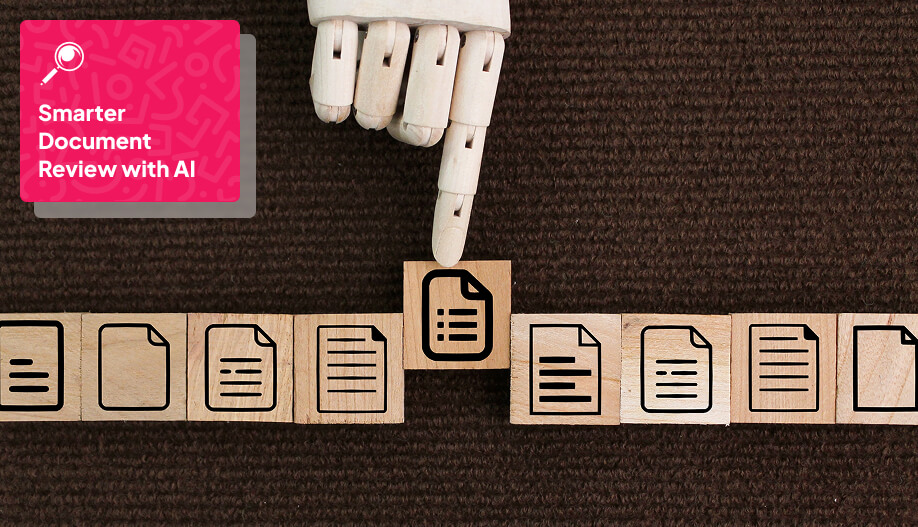
Document review is one of the most resource-intensive tasks in legal workflows, however AI agents are changing that landscape with unmatched speed, consistency, and precision.
Modern AI tools now enable legal teams to rapidly extract and categorize key clauses from contracts, conduct bulk compliance checks, and analyze complex datasets in a fraction of the time it would take manually. This allows attorneys to focus on higher-value tasks such as risk analysis, negotiation strategy, and client advisory.
The Document Review AI Agent automates clause tagging, red flag detection, and ambiguity spotting—helping ensure documents align with evolving legal standards like GDPR or HIPAA. By flagging inconsistencies and identifying risky or non-compliant language, these systems also act as a risk mitigation layer.
Efficiency gains are backed by adoption trends: nearly 48% of law firms are now investing in AI-driven solutions, recognizing the need to accelerate operations without compromising on quality or accuracy.
These capabilities are not just plug-and-play. With custom software development services, firms can tailor document review workflows to their specific needs—integrating AI systems with internal document repositories, compliance protocols, and client-specific contract formats.
At AppMakers USA, we help law firms implement and customize AI solutions that reduce human error, streamline operations, and maintain regulatory confidence, delivering scalable efficiency where it matters most.

Building on the efficiencies gained in document review, the legal industry is increasingly turning to AI-powered contract analysis for deeper, faster insights, and more proactive risk management.
AI platforms can accelerate contract review by up to 80% while achieving accuracy rates of 94%, allowing legal professionals to quickly locate critical clauses and streamline compliance workflows. This shift doesn’t just speed things up, it also reduces the risk of oversight in high-volume or high-stakes environments.
Together, these capabilities allow legal teams to move beyond reactive review into predictive, risk-aware contract management—reducing liability exposure and increasing confidence at every stage of the agreement lifecycle.

After elevating contract analysis and compliance workflows, the next frontier for AI in the legal industry is streamlining the day-to-day. From document formatting to billing logs, AI automates routine tasks, relieving lawyers of time-consuming manual work and reducing operational friction.
Document management becomes more efficient through template-based automation, clause insertion, and version control, helping maintain consistency while reducing human error. AI tools track revisions, flag inconsistencies, and ensure each draft aligns with firm or client standards.
Administrative areas benefit just as much. Automated logging and invoicing systems simplify time tracking and billing—cutting down on entry errors and ensuring compliance with client billing guidelines.
Client intake workflows are also transformed. AI can extract and organize client information, route requests to the appropriate legal personnel, and reduce onboarding delays. Real-time task assignment and tracking systems improve visibility and case management, helping attorneys and support staff meet deadlines more efficiently.
As many firms deal with an overwhelming workload caused by high document volume and growing client demands, automation offers meaningful relief. It allows legal teams to focus more on case strategy, client consultation, and nuanced analysis.
Platforms like CoCounsel and Harvey AI provide reliable assistance for various legal tasks—from scheduling and research to compliance checks and case prep. These tools don’t replace legal expertise—they make it more efficient, accurate, and scalable.

Building on workflow automation, AI is also transforming how legal professionals and the public access critical legal information, eliminating delays and increasing equity in service delivery.
AI-powered chatbots and virtual legal assistants now provide instant, 24/7 access to case law, statutes, and legal guidance. These tools can interpret user queries, reference legal databases, and return contextually accurate answers in real time, removing the traditional bottlenecks of research-heavy environments.
The potential of legal technology and AI reshapes how legal services are delivered to underserved communities. AI-powered self-help tools enable individuals to navigate legal processes independently, increasing access and reducing strain on overburdened court systems.
As AI continues to bridge the gap between information and action, its role in democratizing legal access will only grow. Here’s how:
AI-driven chatbots are playing a critical role in democratizing access to legal support. These tools deliver fast, affordable, and user-friendly assistance for everyday legal needs—often without the cost or delay of traditional services.
Here are a few real-world examples of how chatbot legal assistance is reshaping routine legal tasks:
These chatbots not only simplify complex legal jargon, they also provide step-by-step guidance 24/7, empowering users to navigate processes with confidence.
While chatbots provide accessible entry points, more advanced platforms are redefining what’s possible with AI-driven legal assistance. Imagine posing a complex legal question and receiving an instant, accurate, and context-aware response, no legal background required.
Platforms like Lexis+ AI go far beyond templated replies. They offer advanced capabilities like legal drafting, summarization, precedent analysis, and case law extraction. Rather than functioning as simple assistants, these systems actively guide users through intricate legal matters with speed and precision.
Visual search tools help pinpoint relevant evidence from within case files, while multilingual interfaces make legal content accessible to non-English speakers—an essential feature for firms and nonprofits that support underserved populations.
These systems also streamline legal workflows. Deadline tracking, court rule validation, and compliance flagging are now handled automatically—reducing the chance of human error while improving outcomes. Through workflow orchestration, tasks are delegated and triggered automatically, allowing legal professionals to focus on high-impact strategy.
By leveraging AI-driven automation, firms and legal service organizations can significantly boost productivity, reduce overhead, and expand access to justice, especially in resource-constrained environments.

Interested in building a tool that combines these capabilities? AppMakers USA specializes in designing intelligent, end-to-end AI legal tools tailored to your operations. |

As legal practices evolve, integrating AI isn’t just about innovation, it’s a strategic move toward long-term cost control. By automating time-intensive processes like document review, legal research, and compliance tracking, firms can significantly reduce manual workload and reallocate human resources to higher-value activities.
For budget-conscious firms, platforms offering AI-as-a-Service make it possible to deploy advanced tools without heavy infrastructure investment. This approach makes automation accessible, even for small to midsize firms, while enhancing service delivery for clients.
Whether your goal is to reduce overhead, improve scalability, or increase operational output, AI delivers measurable cost efficiencies across key areas of legal practice.
In the next sections, we’ll explore how AI impacts legal billing, time tracking, and resource allocation—driving greater value without increasing costs.
One of the most immediate ways AI reduces legal costs is by streamlining document-heavy workflows. Automated systems take over tasks that would otherwise consume hours of manual effort which free up your team and speed up delivery.
Here’s how AI optimizes legal document processing:
AI tools such as Logikcull and Clio Duo utilize machine learning to improve accuracy and extract valuable insights from legal data, further enhancing the reliability of automated document processing.
For firms and organizations looking to go beyond off-the-shelf platforms, the development team at AppMakers USA ensures adaptability, integrating similar tools to drastically reduce labor costs tied to document management, while improving accuracy and consistency at scale.
Reducing manual workload is one of the most impactful ways AI delivers cost savings in the legal industry. By automating routine and research-intensive tasks, firms can redirect human effort toward higher-value work—improving both efficiency and client outcomes.
This strategic use of automation not only reduces overhead but also enhances workflow agility, enabling attorneys to prioritize high-value tasks without sacrificing performance.
As AI continues to reduce operational costs, it’s also opening new opportunities for law firms to expand affordable legal services which means broadening access to justice without compromising profitability.
By cutting overhead and streamlining time-intensive processes, AI allows firms to offer more competitive pricing and serve a wider range of clients.

Here’s how AI is driving affordability in legal services:
AI not only improves internal efficiency—it also redefines what’s possible in client affordability, expanding the reach and impact of legal services at scale.

AI technology evolves its role in reshaping legal workflows. This is driving innovation across operations, strategy, and client service delivery.
Here are key developments poised to define the future of legal work:
Whether you're modernizing internal workflows or expanding legal access, now is the time to invest in intelligent infrastructure. AppMakers USA’s highly skilled developers can help you integrate these AI-driven solutions to future-proof your legal practice and stay ahead of industry shifts.

AI can complicate attorney-client privilege by risking data exposure via cloud servers and third parties. To uphold confidentiality, it's crucial to ensure that AI tools adhere to data retention policies and that there are secure contractual agreements with vendors.


AI agents are most effective in workflows that involve high volumes of routine, time-sensitive, or rules-based tasks. These include contract review, compliance tracking, document drafting, eDiscovery, legal billing, and client intake. By handling structured tasks efficiently, AI frees attorneys to focus on strategic, high-touch client matters.
When utilizing AI in the legal field, it's important to address algorithmic bias, privacy risks, and accountability. Ensure that AI tools do not reinforce existing inequalities or compromise confidentiality. Always verify the outputs generated by AI and inform clients transparently about its involvement in your work.
Small firms can leverage cloud-based, AI-as-a-Service platforms that offer pre-trained models and modular features like contract analysis, chatbots, and time tracking. These tools require minimal infrastructure and can be tailored over time, making AI adoption cost-effective and scalable—even for firms with lean budgets.
To ensure the safety of client data, it is essential to utilize dedicated servers and employ zero-retention protocols alongside end-to-end encryption. Additionally, implementing thorough vendor vetting processes and adhering to compliance standards such as SOC 2 and ISO 27001 will further enhance data protection measures.
AI agents are no longer theoretical tools, they're active contributors to the next era of legal practice. From streamlining document review and automating research to enhancing billing, compliance, and accessibility, AI is fundamentally redefining how law firms deliver value.
But as the technology advances, competitive advantage will come not just from using AI—but from implementing it intelligently. Success lies in tailoring these systems to your workflows, clients, and compliance needs.
At AppMakers USA, we help law firms and legal tech innovators design, build, and deploy AI-driven solutions that deliver measurable impact—without disrupting what already works.